Is phlebotomy good for med school? The Best Pre-med Path
Dec 20, 2024
For pre-med students, working in phlebotomy offers unique benefits that will enrich their careers in healthcare.
Not only does it provide practical clinical skills and exposure to a healthcare environment, but it also gives the opportunity to start working or volunteering in healthcare with a certification while studying medicine.
In this article, we explore the benefits of gaining phlebotomy experience for pre-med students and why it can be a strategic choice for aspiring doctors.
Table of Contents
- Benefits of phlebotomy for pre-med students
- Does clinical experience as a phlebotomist matter for medical school?
- Start your phlebotomy journey in FHCA
Why Premeds Should Consider Phlebotomy
Why are phlebotomists important? Phlebotomy, the practice of drawing blood for diagnostic purposes, offers pre-medical students a unique opportunity to gain practical experience and insight into healthcare. This experience can strengthen medical school applications, offering tangible proof of a student's commitment to medicine and patient care.
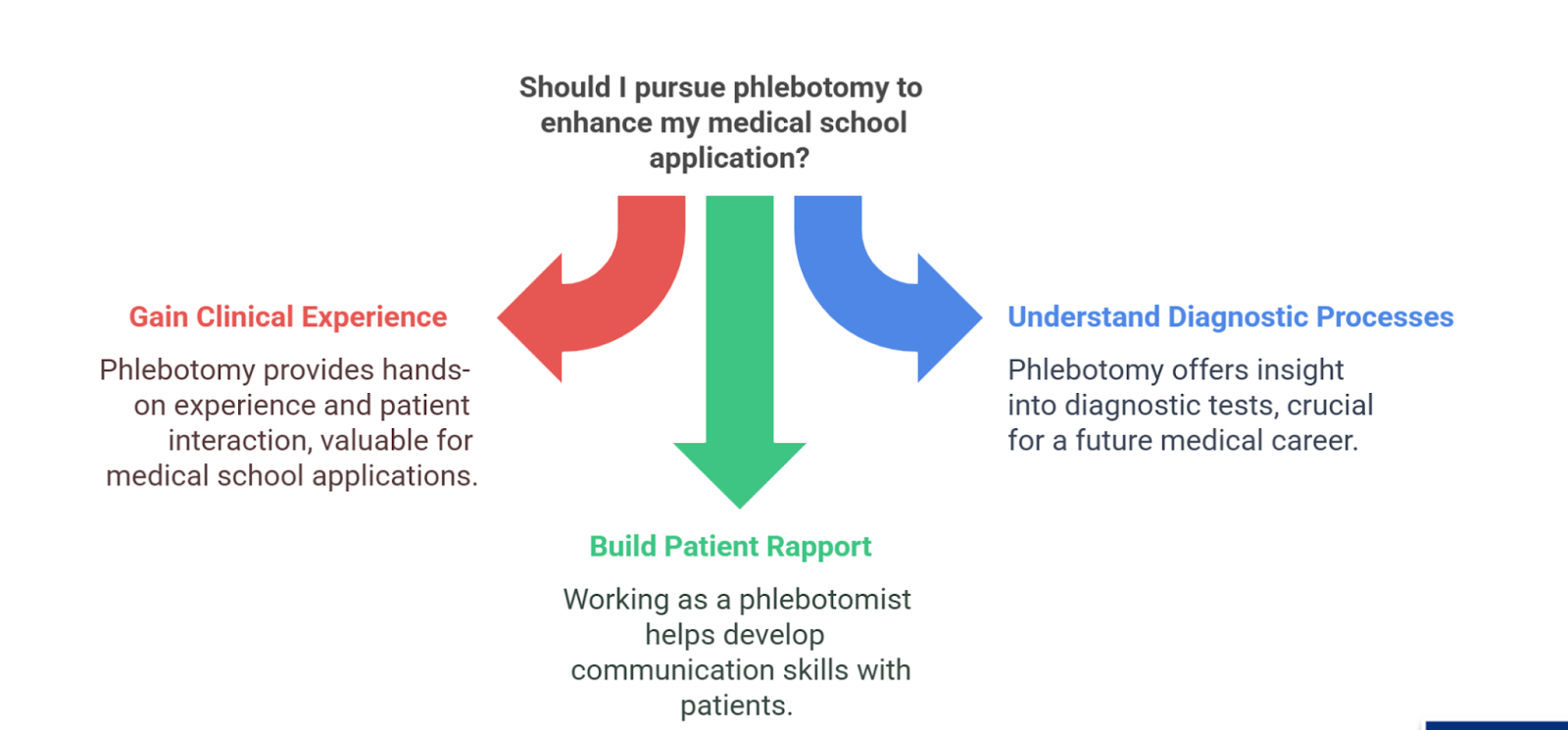
Gaining hands-on experience in phlebotomy can significantly enhance your medical school application. Engaging in phlebotomy volunteer opportunities allows you to develop practical skills, understand patient interactions, and demonstrate your commitment to the healthcare field
“There are many different routes you can take as a premed student. You can volunteer in a hospital, work as a phlebotomist or medical scribe, or become a certified nursing assistant (CNA).”
Hands-on patient interaction experience
Phlebotomists interact directly with patients, performing blood draws and ensuring patient comfort. This role fosters communication skills, patient interactions and bedside manners, essential attributes for aspiring physicians.
Understanding of infection control and safety protocols
Phlebotomy training emphasizes strict adherence to infection control and safety protocols in medical facilities, including proper sterilization techniques and the use of personal protective equipment. Mastery of these protocols is crucial in medical practice to prevent healthcare-associated infections.
Mastery of basic medical procedures
Performing venipuncture and capillary blood collection are fundamental skills in phlebotomy. Proficiency in these procedures provides a solid foundation for more advanced medical techniques encountered in medical school.
Knowledge of laboratory processes and procedures
Phlebotomists play a vital role as one of the Best Jobs for Pre-Med Students in the diagnostic research process by collecting and handling blood specimens for laboratory analysis. Understanding laboratory workflows and the importance of specimen integrity enhances a pre-med student's comprehension of diagnostic medicine.
Does clinical experience as a phlebotomist matter for medical school?
Clinical experience is an important component of a competitive medical school application. Engaging in the Life of a Phlebotomist demonstrates a commitment to healthcare and provides practical skills applicable in medical training.
Demonstrates commitment to healthcare
Working as a phlebotomist reflects dedication to patient care and a proactive approach to assisting patients and gaining medical experience, qualities esteemed by medical school admissions committees.
Offers networking opportunities
Employment in healthcare settings allows phlebotomists to collaborate with various medical professionals and practicing physicians, fostering relationships that can lead to mentorship and valuable insights into the medical field.
Phlebotomist vs CNA: Which Is Better for Med School?
If your long-term goal is medical school, becoming a phlebotomist often provides more direct clinical exposure and relevant hands-on experience than working as a CNA. As a phlebotomist, you perform venipunctures, handle laboratory specimens, and interact closely with patients in diagnostic settings, skills that align strongly with core medical competencies like anatomy, infection control, and patient communication.
While CNAs gain valuable bedside care experience, phlebotomists frequently develop more technical clinical skills and work closely with laboratory processes, which can strengthen your understanding of diagnostics and patient workflow. This focused clinical exposure improves your medical school application andbuilds confidence in procedural skills that are directly applicable in medical training.
Start your phlebotomy journey in FHCA
For pre-medical students seeking on a phlebotomy career, the Florida Health Care Academy (FHCA) offers a comprehensive program designed to equip students with the necessary skills and knowledge. The program includes hands-on training in phlebotomists draw blood collection techniques, infection control, and laboratory procedures, all taught by certified instructors with extensive experience.
FHCA provides flexible class schedules, including morning, afternoon, evening, and Saturday options, to accommodate diverse student needs.

FAQs: Is Becoming a Phlebotomist Good for Pre-Med Students?
Is working as a phlebotomist good experience for medical school?
Yes. Phlebotomy provides direct patient interaction, hands-on clinical skills, and exposure to laboratory diagnostics, all of which strengthen your medical school application and demonstrate real healthcare experience.
How does phlebotomy compare to other pre-med clinical jobs?
Compared to roles like medical scribe or CNA, phlebotomy offers more procedural, hands-on experience. You actively perform venipunctures, handle specimens, and follow safety protocols, which builds technical confidence and clinical competence.
Will medical schools value phlebotomy experience?
Absolutely. Admissions committees value meaningful clinical exposure. Working as a phlebotomist shows patient contact hours, understanding of healthcare systems, and responsibility in a medical setting.
Does phlebotomy help me understand medicine better?
Yes. You gain insight into lab testing, diagnostics, infection control, and patient care workflows, it’s foundational knowledge that supports future medical training.
Can I balance phlebotomy work with pre-med classes?
Many pre-med students choose phlebotomy because certification programs are short and flexible, and work schedules can often accommodate school commitments.