How Long to Get Medical Billing and Coding Certification
Jul 22, 2026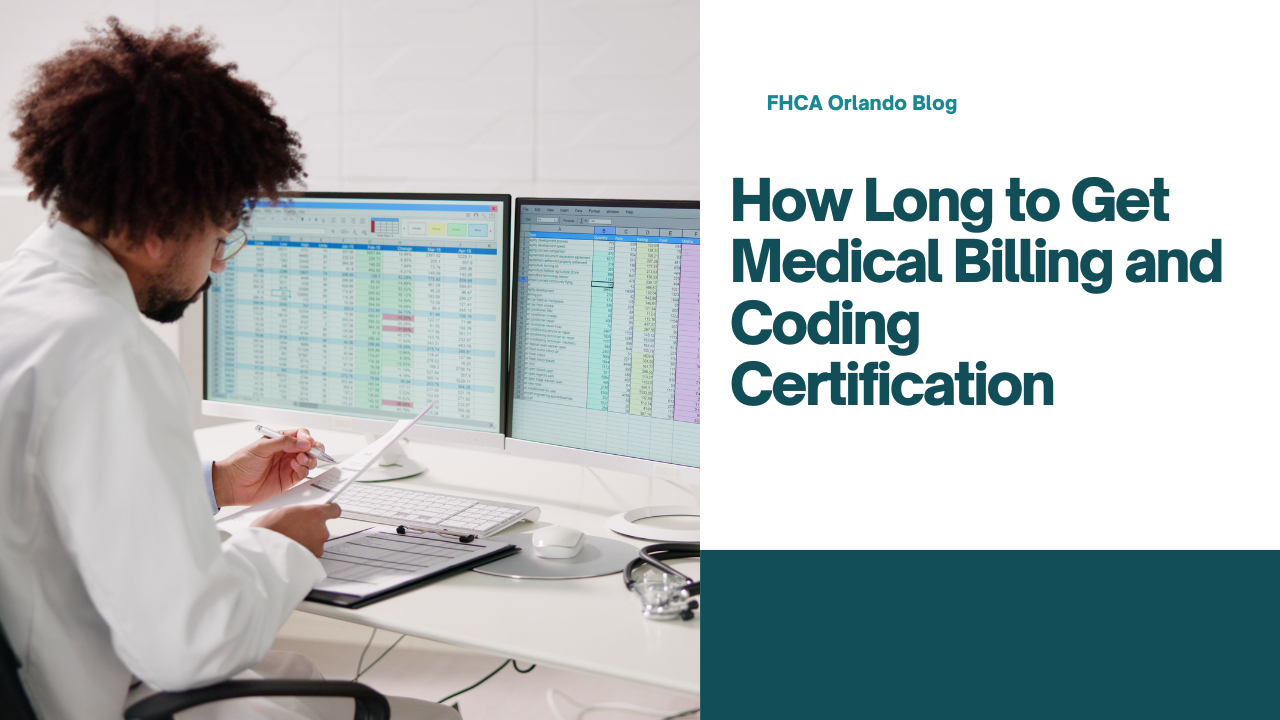
Medical billing and coding certification can take anywhere from a few months to more than a year, depending on the training program you choose and when you take the certification exam. For many students, the process begins with completing a medical billing and coding program that teaches coding systems, healthcare documentation, and insurance reimbursement.
At FHCA Orlando, students complete a 12-week Medical Billing and Coding Program designed to prepare them for entry-level responsibilities and become eligible to register for the national Certified Billing and Coding Specialist (CBCS) certification exam after graduation. The overall timeline also depends on your study pace and exam scheduling.
Table of Contents
- How Long Does It Take to Get Medical Billing and Coding Certification?
- What Steps Are Required Before Certification?
- What Can Affect the Certification Timeline?
- Is Certification Required to Work?
- What Happens After Becoming Certified?
- Can You Get Certified Without Healthcare Experience?
- Choosing the Right Medical Billing and Coding Program
- How Long to Get Medical Billing and Coding Certification FAQs
How Long Does It Take to Get Medical Billing and Coding Certification?
There is no single timeline because certification involves several steps. Most students first complete a training program before registering for a national certification exam.
Programs vary in length, but shorter career-focused programs allow students to enter the workforce sooner than traditional academic pathways. After completing training, students typically spend additional time reviewing course material and preparing for the certification exam.
The process generally includes:
- Completing a medical billing and coding training program.
- Learning medical terminology, anatomy, and coding systems.
- Preparing for a national certification exam.
- Registering for and passing the exam.
- Beginning an entry-level medical billing and coding career.
Students comparing different educational options often start by learning how to start a career in medical billing and coding, since certification is only one part of the overall career path.
What Steps Are Required Before Certification?
Becoming certified involves more than passing an exam. Employers expect candidates to understand healthcare documentation, reimbursement processes, and coding accuracy before entering the profession.
Complete a Medical Billing and Coding Program
Training provides the foundation needed to work with medical records, insurance claims, and standardized coding systems.
Students learn:
- Medical terminology.
- Anatomy and physiology.
- ICD-10-CM coding.
- CPT coding.
- HCPCS coding.
- Insurance claim processing.
- Reimbursement methodologies.
- Healthcare documentation.
FHCA Orlando delivers this training through a fully online 550-hour Medical Billing and Coding Program, allowing students to prepare for administrative healthcare careers while developing practical coding skills.
Learn Coding Systems and Healthcare Documentation
Medical billing and coding professionals translate healthcare services into standardized codes used for insurance reimbursement.
Accuracy is essential because coding affects claim approval, reimbursement, compliance, and healthcare documentation.
During training, students practice reviewing patient records, identifying clinical information, and selecting the appropriate diagnosis and procedure codes before claims are submitted.
Become Eligible for the CBCS Certification Exam
After completing an approved training program, graduates can become eligible to register for the Certified Billing and Coding Specialist (CBCS) certification exam.
The exam evaluates knowledge of:
- Medical terminology.
- Anatomy.
- ICD-10-CM.
- CPT.
- HCPCS.
- Insurance billing.
- Reimbursement.
- Healthcare compliance.
Certification demonstrates that candidates have developed the knowledge employers often seek when hiring medical billing and coding professionals.
What Can Affect the Certification Timeline?
Several factors influence how quickly someone can earn medical billing and coding certification.
Program Length
The biggest factor is the length of the training program.
Career-focused diploma programs can often be completed much faster than degree programs, allowing students to begin preparing for certification sooner.
Study Schedule
Some students study full time, while others balance coursework with work or family responsibilities.
A consistent study schedule often helps students complete training and prepare for the certification exam more efficiently.
Exam Preparation
Completing a program is only part of the process.
Many students spend additional time reviewing coding guidelines, reimbursement concepts, and practice questions before scheduling the certification exam.
Preparing thoroughly can improve confidence and reduce the likelihood of needing to retake the exam.
Is Certification Required to Work?
Certification requirements vary by employer, but many healthcare organizations prefer candidates who have completed formal training and earned a nationally recognized credential.
Certification demonstrates knowledge of medical terminology, coding systems, reimbursement procedures, and healthcare documentation. It can also help candidates stand out when applying for entry-level positions.
As healthcare technology continues evolving, employers still value professionals who understand coding guidelines and documentation standards. Questions about whether AI will take over medical billing and coding often come up alongside certification, but technology continues supporting coding professionals rather than replacing their expertise.
What Happens After Becoming Certified?
Certification opens the door to a variety of administrative healthcare careers.
Medical billing and coding professionals work in physician offices, hospitals, outpatient centers, insurance companies, specialty clinics, and billing organizations. Their responsibilities include reviewing documentation, assigning medical codes, processing insurance claims, and helping providers receive accurate reimbursement.
As professionals gain experience, they may pursue roles in specialty coding, auditing, compliance, revenue cycle management, or health information management. Exploring a medical billing and coding career path can help students understand how opportunities continue growing beyond entry-level positions.
Salary also increases with experience, certification, employer type, and geographic location. Students planning to work in Florida often compare current medical billing and coding salary in Florida information while evaluating long-term career opportunities.
Can You Get Certified Without Healthcare Experience?
Yes. Many students begin medical billing and coding training without previous experience in healthcare.
Career-focused programs teach the medical terminology, anatomy, coding systems, insurance billing, and reimbursement concepts needed before entering the workforce. Students develop these skills throughout the program rather than being expected to already have them.
This approach allows many individuals to start medical billing and coding without healthcare experience, making the profession accessible to career changers, recent graduates, and anyone looking to enter the healthcare field through an administrative role.
Choosing the Right Medical Billing and Coding Program
The length of a program is important, but it should not be the only factor when comparing schools.
A strong medical billing and coding program prepares students to understand healthcare documentation, apply ICD-10-CM, CPT, and HCPCS codes, process insurance claims, and follow reimbursement guidelines. These skills help graduates transition more confidently into entry-level positions and prepare for certification.
FHCA Orlando's Medical Billing and Coding Program is a fully online, 550-hour diploma program completed in 12 weeks. Graduates become eligible to register for the national CBCS certification exam after meeting program requirements.
How Long to Get Medical Billing and Coding Certification FAQs
How long does it take to get medical billing and coding certification?
The timeline depends on the length of your training program, your study schedule, and when you take the certification exam. Many students complete career-focused programs in a few months before preparing for certification.
Do I need certification to work in medical billing and coding?
Certification is not always required, but many employers prefer candidates who hold a nationally recognized credential because it demonstrates knowledge and professional preparation.
Can I complete medical billing and coding training online?
Yes. Many schools offer online programs that prepare students for administrative healthcare careers while covering medical terminology, coding systems, reimbursement, and healthcare documentation.
Can I become certified without previous healthcare experience?
Yes. Many students begin training without prior experience. Medical billing and coding programs are designed to teach the foundational knowledge needed before entering the profession.
What certification does FHCA Orlando prepare students for?
After successfully completing the Medical Billing and Coding Program and meeting graduation requirements, students become eligible to register for the Certified Billing and Coding Specialist (CBCS) certification exam.
Start Preparing for Medical Billing and Coding Certification
Earning a medical billing and coding certification begins with choosing a training program that builds a strong foundation in coding systems, healthcare documentation, reimbursement, and insurance claims.
FHCA Orlando's Medical Billing and Coding Program prepares students for entry-level responsibilities through a fully online, 12-week diploma program. After graduation, eligible students can register for the national CBCS certification exam and take the next step toward a career in healthcare administration.