Medical Billing and Coding vs Medical Assistant
Jul 22, 2026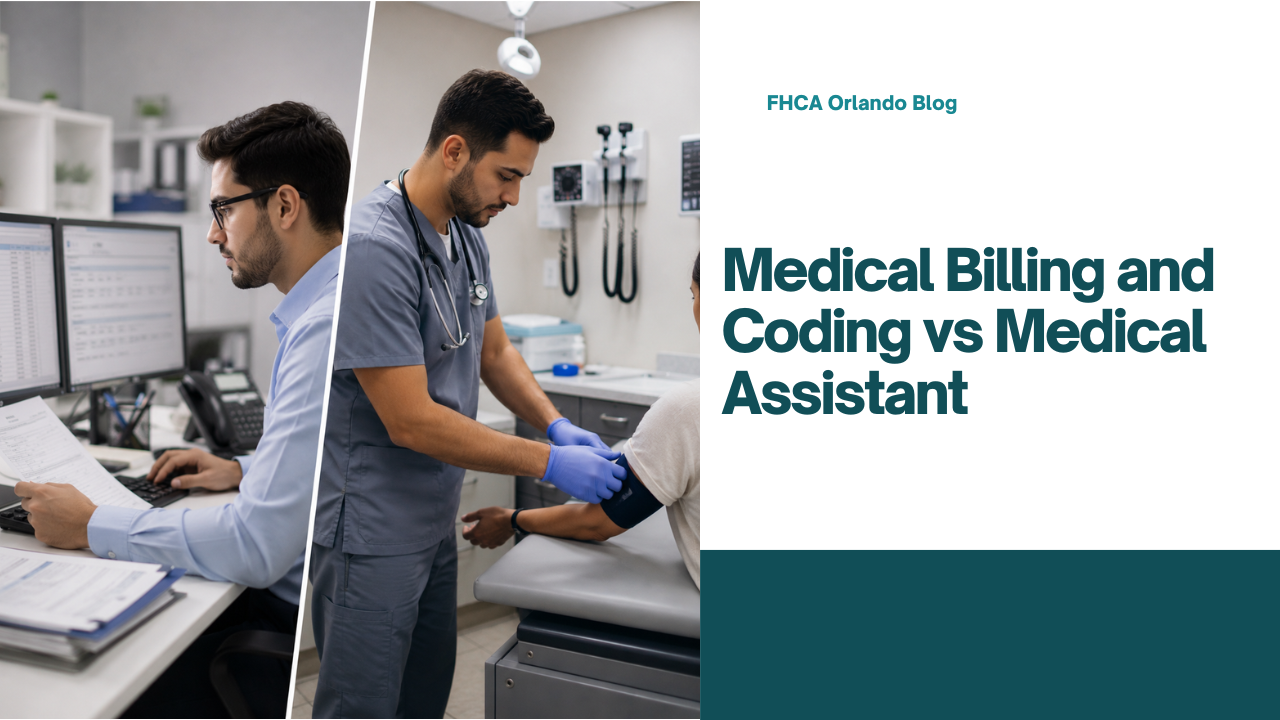
Choosing between medical billing and coding vs medical assistant depends on the type of healthcare career you want. Medical billing and coding focuses on insurance claims, healthcare documentation, and coding systems, while medical assistants combine administrative responsibilities with direct patient care in clinical settings.
Both careers offer a path into healthcare without a four-year degree. Comparing their daily responsibilities, training, salary, work environment, and career opportunities can help you decide which one best matches your goals.
Table of Contents
-
Medical Billing and Coding vs Medical Assistant: Comparing duties and training
-
Medical Billing and Coding vs Medical Assistant: Salary and job outlook
What is medical billing and coding?
Medical billing and coding professionals help healthcare providers manage patient records and insurance claims. They review medical documentation, assign standardized diagnosis and procedure codes, and help ensure providers receive accurate reimbursement for the services they perform.
Most of the work is administrative and computer-based. Medical billers and coders commonly work in physician offices, hospitals, insurance companies, billing organizations, and other healthcare facilities.
At FHCA Orlando, students in the Medical Billing and Coding Program learn to apply CPT, ICD-10-CM, and HCPCS coding systems, process insurance claims, and understand reimbursement procedures through a fully online, 12-week program.
What is a medical assistant?
Medical assistants support physicians and other healthcare professionals by performing both clinical and administrative duties. Depending on the workplace, they may prepare patients for exams, record vital signs, assist during procedures, schedule appointments, update medical records, and manage front-office responsibilities.
Medical assistants work directly with patients throughout the day. Their role combines communication, organization, and clinical support, making it a good option for people who enjoy a fast-paced healthcare environment.
FHCA Orlando's Medical Assistant Program prepares students for entry-level positions by combining classroom instruction with hands-on clinical training. Graduates earn a diploma and prepare for the Certified Clinical Medical Assistant (CCMA) certification exam through the National Healthcareer Association (NHA).
Medical Billing and Coding vs Medical Assistant: Comparing duties and training
Although both careers support healthcare providers, their daily responsibilities are very different. Medical billing and coding centers on healthcare documentation and reimbursement, while medical assistants divide their time between patient care and administrative tasks.
|
Category |
Medical Billing and Coding |
Medical Assistant |
|
Main focus |
Medical records, coding, insurance claims, reimbursement |
Clinical support and administrative duties |
|
Patient interaction |
Limited or indirect |
Frequent, direct patient contact |
|
Work setting |
Medical offices, hospitals, insurance companies, billing departments |
Physician offices, clinics, outpatient centers |
|
Core skills |
Coding accuracy, documentation review, billing systems, compliance |
Vital signs, patient care, communication, scheduling |
|
FHCA program format |
Fully online |
Hybrid instruction with instructor guidance and hands-on training |
|
Credential after completion |
Diploma |
Diploma |
|
Certification preparation |
CBCS certification exam |
CCMA certification exam |
Daily responsibilities
Medical billing and coding professionals review clinical documentation, assign ICD-10-CM, CPT, and HCPCS codes, submit insurance claims, monitor reimbursements, and help resolve claim denials. Accuracy and attention to detail are essential because coding errors can delay payments or create compliance issues.
Medical assistants spend much of their day interacting with patients. They prepare exam rooms, record medical histories, measure vital signs, assist physicians during examinations, schedule appointments, update medical records, and perform other clinical and administrative duties.
If you prefer working behind the scenes with healthcare documentation and insurance processes, medical billing and coding may be a better fit. If you enjoy interacting with patients and supporting clinical care, a medical assistant role may be more appealing.
Education and certification
Medical billing and coding programs focus on medical terminology, anatomy, coding systems, reimbursement methodologies, health insurance, compliance, and claims processing. At FHCA, students complete a fully online, 12-week diploma program and prepare for the national CBCS certification exam.
Medical assistant training includes anatomy, medical terminology, patient care, pharmacology, laboratory procedures, vital signs, medical office administration, and clinical skills. FHCA's program combines classroom instruction with hands-on training to prepare students for the CCMA certification exam.
Certification can strengthen employment opportunities in both careers. If you're wondering how long it takes to get medical billing and coding certification, the overall timeline depends on completing your training program and successfully passing the national certification exam.
Medical Billing and Coding vs Medical Assistant: Salary and job outlook
Salary depends on experience, certification, employer, and location. According to the U.S. Bureau of Labor Statistics, medical records specialists, the category that includes many medical billing and coding professionals, earned a median annual salary of $50,250 in May 2024.
Medical assistants earned a median annual salary of $44,200 during the same period. Both careers continue to show steady demand as healthcare providers expand services and administrative needs grow.
|
Career |
Median Annual Salary |
Job Outlook |
|
Medical Billing and Coding* |
$50,250 |
7% projected growth |
|
Medical Assistant |
$44,200 |
15% projected growth |
*Based on the U.S. Bureau of Labor Statistics category for Medical Records Specialists.
If you're planning to work in Florida, comparing current medical billing and coding salary in Florida data can provide a better picture of local earning potential.
Medical billing and coding may appeal to those looking for higher earning potential in administrative healthcare roles. Medical assisting may be a better choice for students who enjoy direct patient care and clinical responsibilities.
Work environment
Medical billing and coding professionals spend most of their day working with electronic health records, coding software, insurance claims, and billing systems. Many employers also offer remote or hybrid opportunities after gaining experience.
Medical assistants work primarily in physician offices, outpatient clinics, and specialty practices. Their responsibilities include preparing patients, assisting providers, updating records, and supporting daily clinical operations.
The biggest difference is the amount of patient interaction. Medical billing and coding is primarily administrative, while medical assistants work directly with patients throughout the day.
Career growth
Medical billing and coding professionals can advance into coding auditor, compliance specialist, revenue cycle management, health information management, or specialty coding roles.
If you're considering this career, you may also wonder whether AI will take over medical billing and coding as healthcare technology continues to evolve.
Medical assistants can advance into lead medical assistant positions, office management, specialty practices, or continue their education toward other healthcare careers.
Both careers provide opportunities for professional growth. The right path depends on whether you prefer healthcare administration or direct patient care.
Which career path is right for you?
Medical billing and coding may be a better fit if you:
- Prefer administrative healthcare work.
- Enjoy working with medical records and insurance claims.
- Like detail-oriented tasks.
- Want limited patient interaction.
- Are interested in office-based or remote opportunities.
Medical assistant may be a better fit if you:
- Enjoy working directly with patients.
- Prefer a combination of clinical and administrative duties.
- Thrive in a fast-paced healthcare environment.
- Want to assist physicians during patient care.
- Like variety in your daily responsibilities.
Both careers provide rewarding opportunities in healthcare. Choosing the right one depends on your interests, strengths, and preferred work environment.
If you've decided medical billing and coding is the right fit, learning how to start a career in medical billing and coding can help you understand the next steps before enrolling.
Medical Billing and Coding vs Medical Assistant FAQs
Which career pays more: medical billing and coding or medical assistant?
Based on U.S. Bureau of Labor Statistics data, medical billing and coding professionals generally earn a higher median annual salary than medical assistants. Actual earnings depend on experience, certification, employer, and location.
Which career has more patient interaction?
Medical assistants spend much of their day working directly with patients. Medical billing and coding professionals usually work with healthcare documentation, insurance claims, and electronic health records.
Can medical billing and coding be done remotely?
Some employers offer remote or hybrid positions, particularly for experienced professionals. Many entry-level roles begin in an office before transitioning to remote work.
Do both careers require certification?
Certification requirements vary by employer. Many healthcare organizations prefer certified candidates because certification demonstrates professional knowledge and job readiness.
Which career takes less time to complete?
Program length varies by school. At FHCA Orlando, the Medical Billing and Coding Program can be completed in 12 weeks, while the Medical Assistant Program follows a longer training schedule that includes hands-on clinical instruction.
Ready to start your healthcare career?
Medical billing and coding and medical assisting both offer strong opportunities to enter the healthcare field. One focuses on healthcare documentation and insurance processes, while the other combines patient care with administrative responsibilities.
FHCA Orlando offers career-focused training designed to prepare students for entry-level healthcare careers. Learn more about our Medical Billing and Coding Program or speak with an academic advisor to determine which path best fits your goals.