Medical Billing and Coding vs Phlebotomy Salary
Jul 22, 2026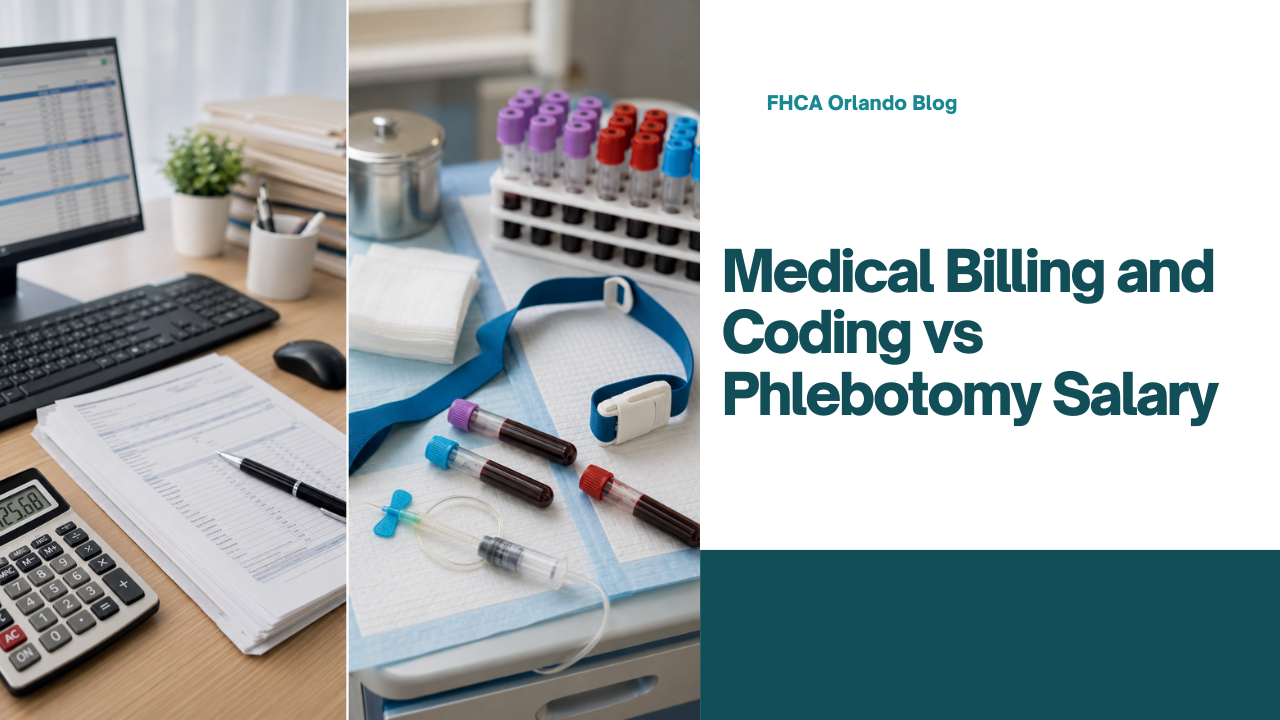
Salary is one of the biggest differences when comparing a career in medical billing and coding with phlebotomy. While both professions play an important role in healthcare, they differ in earning potential, daily responsibilities, and work environment.
According to the U.S. Bureau of Labor Statistics (BLS), medical billing and coding professionals generally earn a higher median annual salary than phlebotomists. This guide compares both careers, explains what affects salary, and helps you understand which path may better match your career goals.
Table of Contents
- Medical Billing and Coding vs Phlebotomy Salary Comparison
- Why Do Salaries Differ?
- Which Career Offers Better Long-Term Earning Potential?
- Is Medical Billing and Coding or Phlebotomy Right for You?
- Medical Billing and Coding vs Phlebotomy Salary FAQs
Medical Billing and Coding vs Phlebotomy Salary Comparison
The U.S. Bureau of Labor Statistics reports a median annual salary of $50,250 for Medical Records Specialists, the occupational category that includes many medical billing and coding professionals.
During the same reporting period, phlebotomists earned a median annual salary of $43,130. Actual earnings vary based on experience, certification, employer, and geographic location.
|
Career |
Median Annual Salary |
Projected Job Growth (2024–2034) |
|
Medical Billing and Coding* |
$50,250 |
7% |
|
Phlebotomy |
$43,130 |
8% |
*Salary data reflects the BLS Medical Records Specialists occupational category.
Although medical billing and coding reports a higher median salary, both careers continue to experience steady demand across the healthcare industry.
Why Do Salaries Differ?
Several factors influence how much professionals earn in both careers. Salary depends not only on the occupation but also on the skills required, employer type, certification, and years of experience.
Daily Responsibilities
Medical billing and coding professionals manage healthcare documentation, assign medical codes, process insurance claims, and support reimbursement procedures. Their work is primarily administrative and typically takes place in office or remote healthcare settings.
Phlebotomists collect blood specimens for laboratory testing, blood donations, and medical procedures. The role involves direct patient care and requires following strict safety and specimen handling protocols.
These differences in responsibilities partly explain why salaries are not identical, even though both careers support patient care.
Education and Training
Training requirements also differ between these professions.
Medical billing and coding programs focus on medical terminology, anatomy, coding systems, insurance claims, reimbursement methodologies, and healthcare documentation. FHCA Orlando's Medical Billing and Coding Program prepares students through a fully online, 550-hour diploma program.
FHCA Orlando's Phlebotomy Program prepares students to learn blood collection techniques, infection control, specimen handling, patient identification, and laboratory safety. Program length varies depending on the institution and state requirements.
Certification and Earning Potential
Certification is not always required by law, but many healthcare employers prefer candidates who hold nationally recognized credentials.
For medical billing and coding professionals, certification may strengthen employment opportunities and contribute to long-term career growth. How long it takes to get medical billing and coding certification depends on the training program and the certification pathway you choose.
Phlebotomists may also pursue national certification depending on employer preferences and state regulations.
Work Environment
Work setting can also influence earning potential.
Medical billing and coding professionals commonly work in physician offices, hospitals, insurance companies, billing services, and other healthcare organizations. Medical billing and coding salary in Florida may vary depending on the employer, experience, certification, and location.
Phlebotomists usually work on-site in hospitals, laboratories, outpatient clinics, physician offices, and blood donation centers, where direct patient interaction is part of the daily routine.
Which Career Offers Better Long-Term Earning Potential?
Medical billing and coding professionals often increase their earning potential by gaining experience, earning national certification, or specializing in outpatient coding, compliance, or revenue cycle management.
Ongoing advances in healthcare technology, including questions about whether AI will take over medical billing and coding, continue to shape conversations about the profession.
Phlebotomists can also increase their salary through experience, lead roles, or additional healthcare training. Some choose to continue their education in nursing, laboratory sciences, or other clinical professions.
The better long-term option depends on the type of work you enjoy and the career path you plan to build.
Is Medical Billing and Coding or Phlebotomy Right for You?
Salary is important, but it should not be the only factor when choosing a healthcare career.
Medical billing and coding may be a good fit if you enjoy administrative work, attention to detail, and working with healthcare documentation and insurance claims.
Phlebotomy may be a better choice if you prefer direct patient interaction, collecting blood specimens, and working in clinical environments throughout the day.
Both careers provide opportunities to enter the healthcare field without completing a four-year degree.
Medical Billing and Coding vs Phlebotomy Salary FAQs
Which career pays more, medical billing and coding or phlebotomy?
Based on BLS data, medical billing and coding professionals generally earn a higher median annual salary than phlebotomists. Actual earnings depend on experience, certification, employer, and location.
Can certification increase salary?
Certification may improve employment opportunities and earning potential in both careers. Employer requirements vary, but many healthcare organizations prefer nationally certified candidates.
Which career has better job growth?
Both careers have positive employment outlooks. The BLS projects 7% job growth for medical records specialists and 8% growth for phlebotomists between 2024 and 2034.
Is medical billing and coding less physically demanding than phlebotomy?
In many cases, yes. Medical billing and coding is primarily office-based and focuses on documentation, coding, and insurance claims. Phlebotomy involves standing, moving throughout clinical settings, and collecting blood specimens from patients.
Can I start a medical billing and coding career without previous healthcare experience?
Many training programs are designed for students entering healthcare for the first time. How to start a career in medical billing and coding explains the typical education, training, and certification process.
Ready to Start a Career in Medical Billing and Coding?
If you're looking for a healthcare career that combines administrative skills with long-term growth opportunities, medical billing and coding may be the right fit.
FHCA Orlando's Medical Billing and Coding Program is a fully online, 550-hour diploma program that prepares students for entry-level responsibilities and eligibility to register for the national CBCS certification exam after graduation.